Aging-in-place bathroom tile remodels: what to plan for
By Hannah Moreau · Updated 2026-07-08
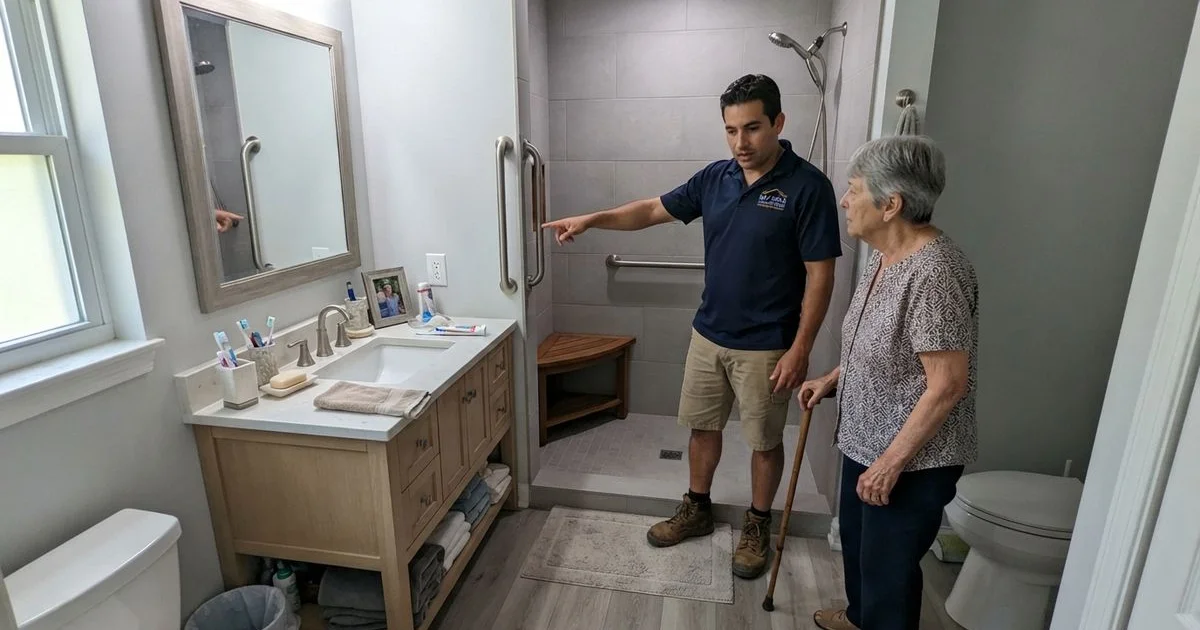
Planning a bathroom remodel for aging in place, whether for yourself or to help a parent stay safely at home, comes with a different set of priorities than a typical bathroom refresh. Here’s what actually matters and where tile choices make the biggest difference.
Why the bathroom is the priority room
More falls happen in the bathroom than almost anywhere else in the home, largely because of wet, hard, and often uneven surfaces combined with tight spaces. A tile remodel focused on aging in place isn’t about changing the whole look of the room, it’s about removing the specific hazards: slippery surfaces, tripping points like shower curbs, and a layout that doesn’t accommodate a shower chair or, eventually, mobility equipment.
The tile and layout changes that matter most
- Slip-resistant tile on floors and shower surfaces. Textured, matte-finish tile provides meaningfully more traction than a glossy, polished surface, especially when wet. This is worth prioritizing over how a tile looks in a showroom sample.
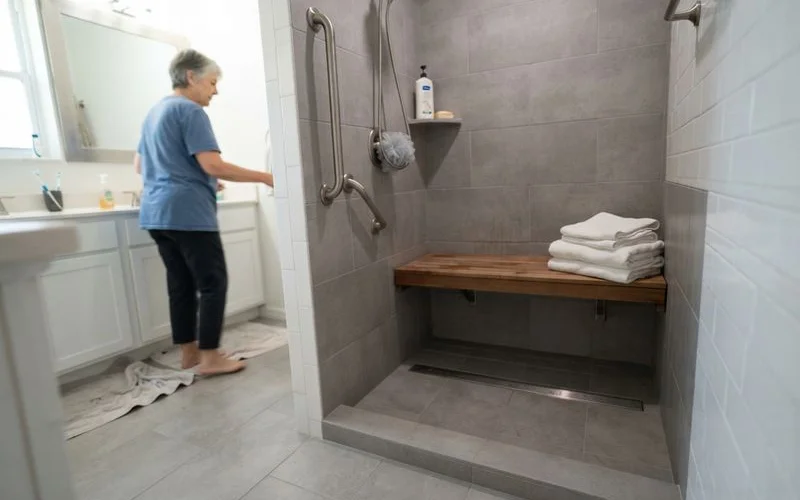
- A curbless or low-curb shower entry. Removing the step-over curb eliminates one of the most common tripping hazards in a bathroom and makes the space usable with a shower chair now and a wheelchair later if needed.
- A built-in bench or fold-down seat. Planned into the tile layout from the start, a bench avoids the need for a bulky freestanding seat later.
- Larger, clearer floor space. Reworking the layout to open up turning radius near the shower and toilet makes a real difference if mobility changes down the road.
Planning the project in stages
A full aging-in-place remodel doesn’t have to happen all at once. Some families tackle the highest-priority items first (slip-resistant flooring, grab bar blocking behind the walls) and phase in a curbless shower or full layout change later. If you know a bigger renovation is coming eventually, it’s worth asking your contractor to install blocking for future grab bars during any interim work, even if the bars themselves go in later. It’s a small addition during construction and a much bigger one to retrofit after the walls are closed up. For typical price ranges on a project like this, see our guide on what a bathroom or shower retile costs in Tampa.
| Priority | Why it matters | Can be phased in later? |
|---|---|---|
| Slip-resistant tile | Reduces fall risk directly | Harder to add later without a retile |
| Grab bar blocking | Needed structurally behind the wall | Best done during any wall work |
| Curbless shower entry | Removes tripping hazard, future-proofs mobility | Requires floor and drain changes |
| Built-in shower bench | Convenience and safety | Easier to add during a shower retile |
Talking through the decision as a family
If this remodel is for a parent rather than yourself, the framing matters as much as the plan. Presenting it as a way to stay comfortably independent at home, rather than a response to declining ability, tends to get a better reception. Bringing a parent into decisions about tile color and layout, rather than presenting a finished plan, also helps the change feel like theirs rather than something being done to them.
Lighting and color contrast matter too
Tile choices affect more than fall risk. Good lighting over the shower and vanity area, combined with tile that offers visible contrast between the floor, wall, and any curb or step, helps aging eyes judge depth and distance more accurately. A monochrome bathroom can look sleek in photos but make it harder to tell where the floor ends and the shower begins, which matters more than it sounds like for anyone with reduced depth perception. A contrasting border or accent strip at transition points is a small design choice that adds real, practical value here.
Finding the right contractor
Not every contractor has experience with aging-in-place specifics like proper grab bar blocking placement or ADA-adjacent clearance requirements. When comparing bathroom and shower tile contractors in Tampa, ask directly about their experience with curbless showers and accessibility-focused remodels, since this is a specialized enough area that not every otherwise-solid contractor has hands-on experience with it.
For more on how contractors on this site are scored, see our methodology. Visit the homepage to browse every category we track.
FAQ
- What's the single most important tile change for an aging-in-place bathroom?
- Slip resistance on the shower and floor surfaces. A fall in the bathroom is one of the most common injuries for older adults at home, and choosing a properly rated slip-resistant tile addresses the biggest risk directly.
- Is a curbless shower worth the extra cost for aging in place?
- For many families, yes. A curbless (zero-threshold) shower removes the tripping hazard of stepping over a curb and makes it possible to use a shower chair or, eventually, a wheelchair without a renovation. It requires more planning for drainage and slope, which adds cost, but it's harder to retrofit later.
- Can an existing bathroom be adapted without a full retile?
- Sometimes. Adding grab bars, a shower seat, or a handheld showerhead doesn't require new tile. But if the existing floor isn't slip-resistant or the shower has a high curb, those specific issues usually do require tile work to fix properly.
- How do I bring this up with a parent who's resistant to bathroom changes?
- Framing it around independence rather than decline tends to land better: a walk-in shower and better lighting are about staying in the home longer and more comfortably, not signs of losing ability. Involving them in material and design choices helps too.