Should you retile before selling your Tampa home?
By Hannah Moreau · Updated 2026-07-16
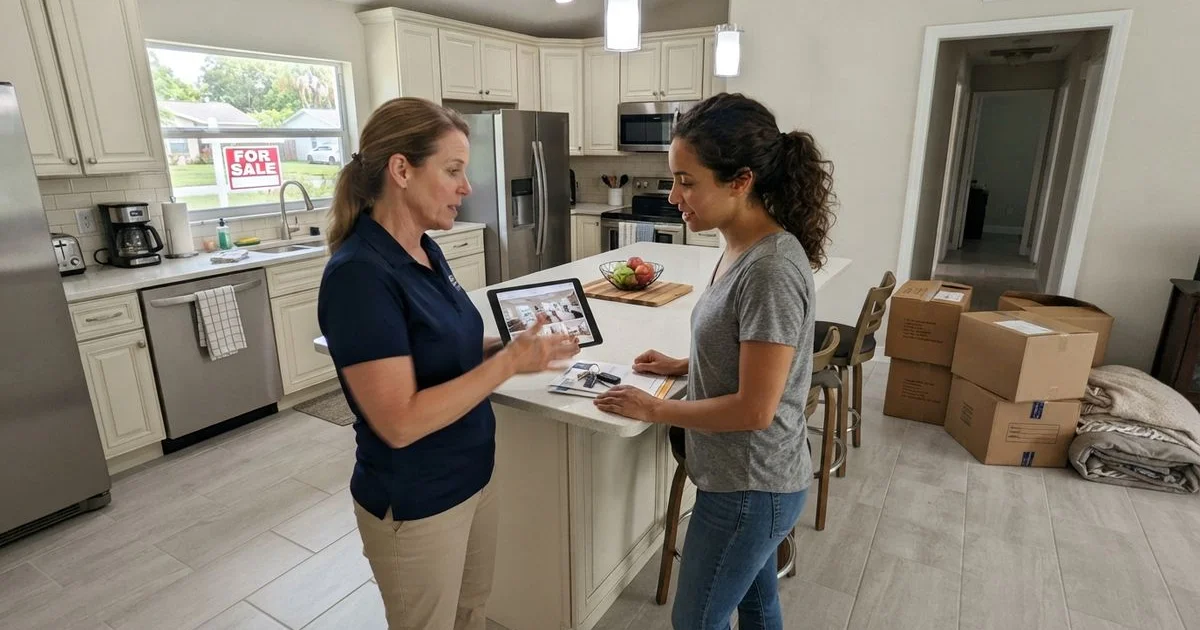
Deciding whether to retile before putting a Tampa home on the market comes down to a fairly simple question: will the cost of the work be recovered in the sale, or would that money and time be better spent elsewhere. For typical price ranges to weigh against, see our guide on what tile installation costs in Tampa and what changes the price. Here’s how to think it through.
When retiling is usually worth it
- Visibly cracked or damaged tile. Buyers notice damage immediately during a showing, and it raises questions about what else might be neglected. Damaged tile in a kitchen or bathroom is one of the more common places buyers negotiate on price.
- Failed grout in wet areas. Cracked, moldy, or missing grout in a shower reads as a maintenance red flag, even if the underlying tile is fine. This is often cheaper to fix than full retiling, but it needs to be addressed either way.
- Flooring that clashes badly with the rest of the home. If most of the home has been updated except one room with dated, mismatched flooring, that room tends to stand out in a way that affects a buyer’s overall impression.
When it’s probably not worth it
- Tile that’s in good condition but stylistically dated. Buyers increasingly expect to make some cosmetic updates themselves, and spending on a full retile for style alone doesn’t always come back at closing.
- A hot, fast-moving market. If homes in your area are selling quickly regardless of minor cosmetic issues, the time spent on a renovation might cost you more in lost market timing than it gains in sale price.
- A limited budget with competing priorities. If there’s only room for one improvement before listing, a kitchen or bathroom retile is rarely the highest-return option compared to things like fresh paint or fixing obvious functional issues.

Small tile fixes that punch above their cost
Between a full retile and doing nothing, a few small, targeted fixes tend to have an outsized effect on how a room shows. Replacing a handful of visibly cracked tiles, recaulking around a tub or shower, and a thorough grout clean in high-traffic areas are all inexpensive compared to a full room retile, and they address the specific details buyers tend to zero in on during a showing. These small fixes are worth doing even when a full retile isn’t in the budget, since they close off the most obvious objections without the cost or timeline of a bigger project.
A middle option: clean and reseal instead of a full retile
If the tile itself is structurally sound but looks tired, a professional deep clean and reseal is a fraction of the cost of a full retile and can meaningfully improve how a room shows. This is worth strongly considering before committing to a full replacement, especially in a room where the tile isn’t damaged, just dull.
| Condition | Recommended approach |
|---|---|
| Cracked or chipped tile | Retile the affected area or room |
| Failed or moldy grout | Regrout, may not need full retile |
| Dull but intact tile | Professional clean and reseal |
| Dated style, no damage | Often leave for buyer, unless budget allows |
What a home inspection might flag anyway
Even if you decide not to retile, it’s worth having any obviously loose or hollow-sounding tile checked before listing. A buyer’s inspector will likely flag the same issues, and having an answer ready (already fixed, or a credit offered at closing) puts you in a stronger negotiating position than being caught off guard by an inspection report during a pending sale. Addressing a small, contained issue before listing is almost always cheaper and less stressful than negotiating over it after an offer is already on the table.
Talking to your real estate agent first
Before spending on any flooring work, ask your agent what’s actually moving comparable listings in your specific Tampa neighborhood right now. Buyer expectations shift by market and by price point, and an agent with recent local sales data has a better read on where your money will actually help than a general rule of thumb.
If you do decide to move forward, get quotes from a few tile installation specialists in Tampa and ask about turnaround time specifically, since a listing timeline usually has less flexibility than a typical remodel schedule.
For details on how contractors are scored on this site, see our methodology. Visit the homepage to browse every category we track.
FAQ
- Does new tile flooring increase a home's sale price?
- It can help, especially in kitchens and bathrooms where dated or damaged flooring is an easy thing for buyers to fixate on during a showing. Whether it moves the actual sale price depends on your local market and how the rest of the home compares to similar listings.
- Is it better to retile or just deep clean and reseal existing tile?
- If the existing tile and grout are in decent shape, a professional clean and reseal is far cheaper and can meaningfully improve how the space presents. Save a full retile for tile that's visibly cracked, dated in a way buyers notice, or has failed grout in wet areas.
- Should I match the buyer's likely taste or choose something neutral?
- Neutral, timeless choices (simple porcelain in light tones) tend to appeal to the widest range of buyers. Bold or trend-specific tile can actually work against you if a buyer can't picture it fitting their own style.
- What if my tile is fine but outdated in style?
- This is the harder call. Outdated but undamaged tile sometimes gets left for the buyer to update on their own terms, especially in a competitive market where speed to listing matters more than a full flooring overhaul.