What to expect during a tile installation job, start to finish
By Hannah Moreau · Updated 2026-06-26
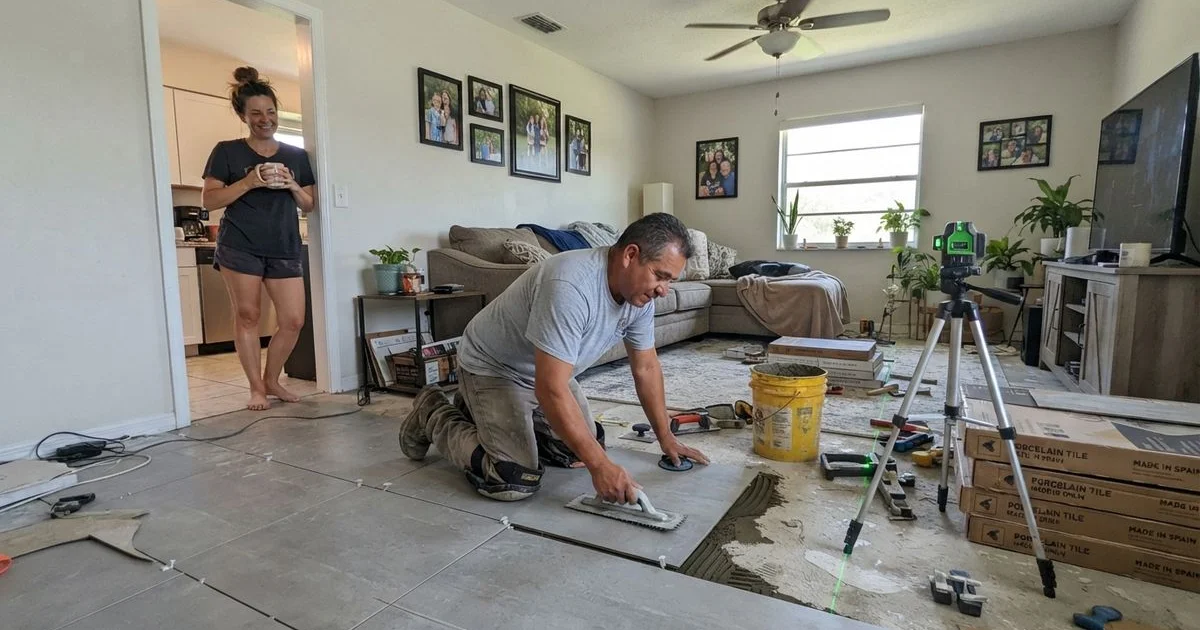
Once you’ve picked a contractor and a tile, the installation itself follows a fairly consistent sequence. Knowing what happens at each stage makes it easier to spot a job that’s on track versus one that’s cutting corners.
Site visit and measurement
Before any tile is ordered, a contractor should measure the space in person, not just work off a phone estimate. This visit is also when they’ll check the subfloor for level, moisture, and any existing damage that needs addressing before tile goes down. If a contractor skips this step and quotes purely from square footage you provide, treat the number as rough at best. For a breakdown of what typically pushes that number up or down, see our guide to what tile installation costs in Tampa.
Material delivery and staging
Tile typically arrives a few days before work starts, giving time to confirm the shipment matches the order (color, quantity, dye lot) before the crew shows up. Buying 10 to 15% more tile than the exact square footage is standard practice, covering cuts, breakage, and future repairs from the same batch.
Demo and subfloor prep
If old flooring needs to come out, this is typically day one. After removal, the crew checks the subfloor for cracks, moisture, or unevenness, and does any needed leveling or backer board installation. This step is easy to rush but shouldn’t be, since problems here show up as cracked tile or uneven grout lines months later.
Layout and dry fit
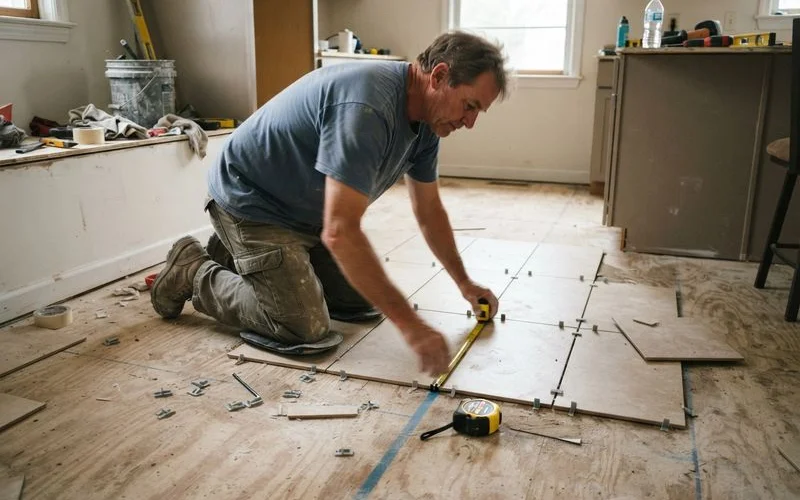
Before anything is set permanently, most installers do a dry layout, placing tiles (without adhesive) to plan cut lines, center the pattern in the room, and avoid awkward slivers of tile at the edges. This step matters more than it looks, since a poorly planned layout is one of the more common complaints about rushed installations.
Setting the tile
Mortar goes down in small sections at a time using a notched trowel, and tile is set into it with spacers to keep grout lines even. This is the slowest part of the job since it has to happen section by section rather than all at once, and it typically needs 24 to 48 hours to cure before grout goes on.
Grouting and sealing
Once the mortar has cured, grout fills the joints between tiles. Excess grout is wiped from the tile surface before it hardens (the window for this is tight, often just an hour or two), and the whole area is left to cure again, typically another day or two depending on humidity. Sealing, if the tile or grout calls for it, usually happens last.
Final walkthrough
A good contractor walks the finished space with you before calling the job done. This is the time to check for consistent grout lines, flush tile edges without noticeable lippage, clean caulk lines around tubs and fixtures, and a clean jobsite with no leftover debris. Reviewers across the tile installation category in Tampa consistently mention this kind of thorough final check and daily cleanup as a sign of a contractor who takes the job seriously from start to finish.
What daily communication should look like
A crew that shows up on schedule and gives you a quick heads-up about the day’s plan, even a two-minute conversation before starting, tends to correlate with a smoother project overall. This is one of the details reviewers mention most often when a job goes well: knowing roughly when the crew will arrive, what they’re tackling that day, and getting a heads-up if something (a delayed material shipment, a subfloor issue found mid-demo) is going to shift the schedule. It costs a contractor nothing to communicate this way, and its absence is usually the first thing that turns a good installation into a frustrating one, even if the finished tile work is technically fine.
Table: typical timeline by job size
| Job | Typical duration |
|---|---|
| Backsplash or small accent area | 1 - 2 days |
| Single bathroom retile | 2 - 4 days |
| Full room floor (with removal) | 5 - 8 days |
| Whole-home flooring | 2+ weeks |
These ranges assume no major surprises once demo starts. Cracked subfloors, water damage found underneath old tile, or a delay in a special-order material can extend any of them.
To understand how contractors on this site are scored and ranked, see our methodology. The homepage is the place to start browsing every category we cover.
FAQ
- How long does a typical tile installation take?
- A single bathroom or small kitchen backsplash often wraps up in one to three days. A full room floor or a job that includes tearing out old flooring can run a week or more, depending on square footage and drying time between steps.
- Do I need to move out during installation?
- Usually not for a single-room job. You'll want to keep the room itself clear of foot traffic and pets while mortar and grout cure, and expect some dust even with containment measures in place.
- Why does the schedule include waiting days I'm not seeing work happen?
- Mortar and grout both need cure time before the next step can start. Rushing this risks tile shifting or grout failing early, so a contractor building in a day of cure time is a good sign, not a delay.
- What should be done at the final walkthrough?
- Check grout lines for consistency, look for any lippage (tile edges that sit slightly higher than their neighbor), confirm caulking around edges and fixtures, and make sure any debris or dust has been cleaned up before the crew leaves.