Travertine and natural stone flooring in Tampa: what to expect
By Hannah Moreau · Updated 2026-06-22
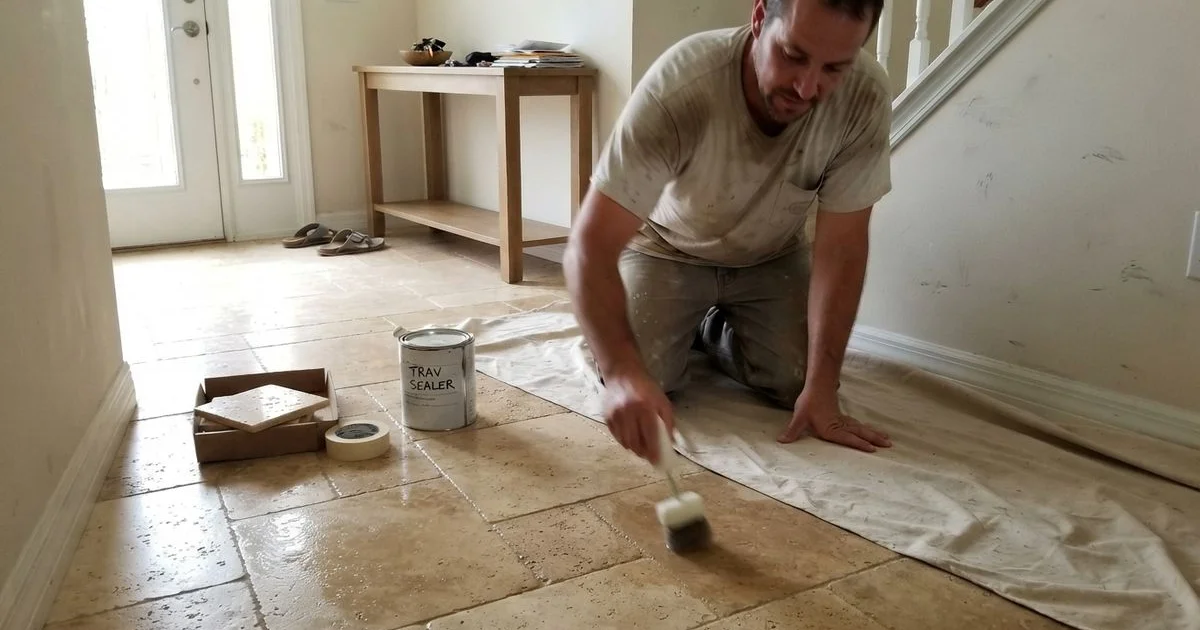
Travertine, marble, and other natural stone flooring bring a different look and a different maintenance routine than ceramic or porcelain tile. If you’re weighing stone for a Tampa home, here’s what actually happens during installation and what keeps it looking good afterward.
Why homeowners choose natural stone
Natural stone reads as a step up in a lot of Tampa homes, especially in entryways, primary bathrooms, and open-plan living areas where the material sets the tone for the whole room. Travertine in particular handles heat well and tends to feel cooler underfoot than porcelain, which matters through a Florida summer. Marble brings a distinct veining pattern that porcelain printed to look like marble can approximate but never quite match up close.
The tradeoff is that natural stone is a living material. Every slab or tile is naturally slightly different, and the material is more porous than manufactured tile, which changes both the installation process and the long-term care routine.
What installation actually involves
Stone installation follows the same broad steps as a standard tile installation (subfloor prep, layout, setting, grouting) but with a few extra stages:
- Dry layout first. Because natural stone varies piece to piece in color and vein pattern, installers typically lay out several pieces dry before setting anything, so they can balance color variation across the room rather than leaving noticeable clusters.
- Substrate check. Stone is heavier than most ceramic tile, so subfloor strength and flatness matter more. A subfloor that would pass for ceramic can still need reinforcement for a full stone floor.
- Setting and grouting. This step looks similar to any tile job, though wider or narrower grout lines are common depending on the stone’s edge finish.
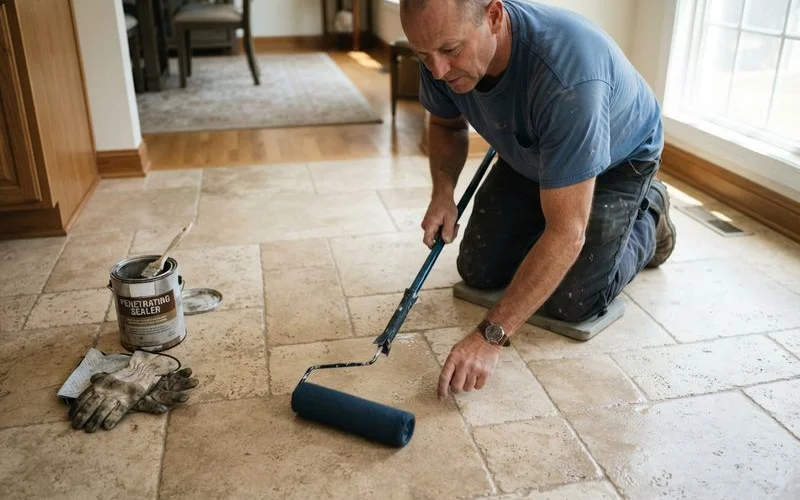
- Sealing. This is the step that doesn’t apply to most porcelain. A penetrating sealer soaks into the stone’s surface to reduce how much liquid it absorbs, protecting against staining before the floor ever sees daily use.
Ongoing care that’s different from tile
| Task | Ceramic/porcelain | Natural stone |
|---|---|---|
| Sealing | Rarely needed | Needed at install, then every 1-3 years |
| Cleaning products | Most standard cleaners fine | Avoid acidic or abrasive cleaners |
| Chip/crack repair | Usually full tile replacement | Often fillable and polishable |
| Cost to install | Lower | Higher, due to material and labor |
Acidic cleaners (vinegar-based products are a common culprit) can etch natural stone over time, dulling the surface even through a sealer. Most contractors who work in this category recommend a pH-neutral stone cleaner instead, especially for anything used regularly like a kitchen floor or shower surround.
What it costs relative to tile
Natural stone generally costs more than ceramic and often more than porcelain, both in material and in labor, since dry-laying and precise cutting take longer. Expect a meaningfully wider range than a standard tile job, driven mostly by which stone you choose. Travertine tends to sit on the more accessible end of the natural stone range, while imported marble or intricate mosaic work pushes toward the top.
Filled versus unfilled travertine
Travertine specifically comes in a filled or unfilled finish, and the difference affects both look and maintenance. Filled travertine has its natural surface pores pre-filled with a resin or grout-like compound during manufacturing, giving a smoother, more consistent surface that’s easier to clean and reseal over time. Unfilled travertine keeps its natural pitted texture, which some homeowners prefer for a more rustic look, but those open pores collect more dirt and grime and need more frequent attention to stay looking good. Ask which finish you’re getting before you commit, since it changes the cleaning routine you’ll be signing up for.
Choosing an installer
Not every tile contractor works with natural stone regularly, and the skill gap shows up in small details: consistent grout lines around irregular edges, even color distribution across the room, and a sealing job that actually gets done rather than skipped. When comparing natural stone and marble specialists in Tampa, ask to see photos of a finished floor a few months after installation rather than just the day it was set, since sealing quality and grout consistency show up more clearly once a floor has been lived on.
If you’re comparing contractors across categories or want to understand how this directory scores and ranks them, our methodology explains the process, and the homepage is the starting point for browsing every tile category we track.
FAQ
- Is travertine a good choice for Florida homes?
- Yes, with some caveats. Travertine handles heat and stays cooler underfoot than porcelain, which suits Tampa's climate. It's more porous than porcelain though, so it needs sealing at installation and again on a regular schedule to resist staining and moisture.
- How is installing natural stone different from ceramic or porcelain tile?
- The setting process is similar, but stone slabs vary more piece to piece in thickness and color, so installers spend more time dry-laying and matching pieces before setting anything permanently. Sealing is also an extra step ceramic and most porcelain don't need.
- How often does natural stone flooring need to be resealed?
- Most penetrating sealers hold up for one to three years depending on foot traffic and how porous the specific stone is. High-traffic entryways and kitchens typically need resealing more often than a low-traffic hallway.
- Can travertine or marble be repaired if it chips or stains?
- Often yes. Small chips can be filled and polished, and many stains lift with a poultice treatment if caught early. Deep etching or long-set stains sometimes require professional honing to restore the surface.